Next-day delivery 5-year warranty ★★★★★ 4.8 / 2,140 reviews Next-day delivery 5-year warranty ★★★★★ 4.8 / 2,140 reviews Next-day delivery 5-year warranty ★★★★★ 4.8 / 2,140 reviews Next-day delivery 5-year warranty ★★★★★ 4.8 / 2,140 reviews
Hair Clippers (EN)
Article

Nail Clipping

Taking care of our pet involves not only occasional trimming or brushing, but also clipping their nails. Not all pets spend enough time outdoors to wear them down naturally. And even those that don't need that care have a hidden dewclaw on the thumb …

ET
Editorial team
10. 09. 2026

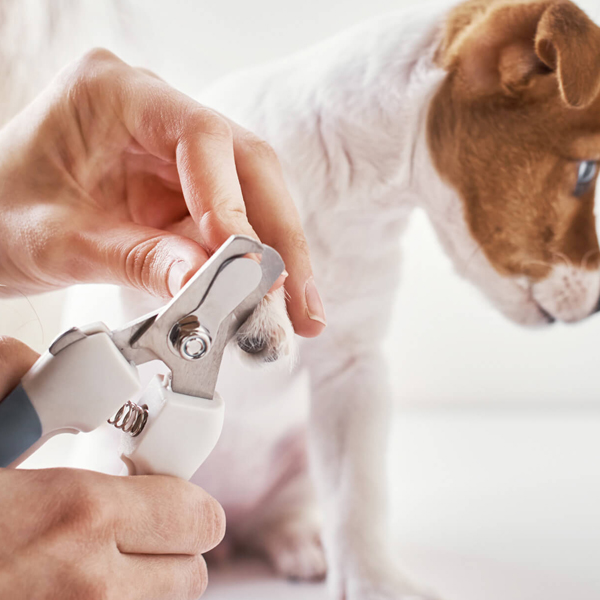
Taking care of our pet involves not only occasional trimming or brushing, but also clipping their nails. Not all pets spend enough time outdoors to wear them down naturally. And even those that don't need that care have a hidden dewclaw on the thumb that sits higher than the others and therefore has nothing to wear against. So once in a while, but regularly, they should be trimmed.

Your pet deserves special care

Even though nails grow relatively slowly, their length should not exceed the paw pad. Unlike humans, dogs have a round nail with living tissue inside. For that reason, you definitely cannot use scissors meant for flat human nails. You need special clippers that cut the nail evenly so it doesn't split or injure the tissue. For small breeds, small clippers are sufficient, but larger dogs have hard and strong nails, so they need larger clippers. Both sizes can be purchased from the comfort of your home at our e-shop.

Be careful where you cut the nail!

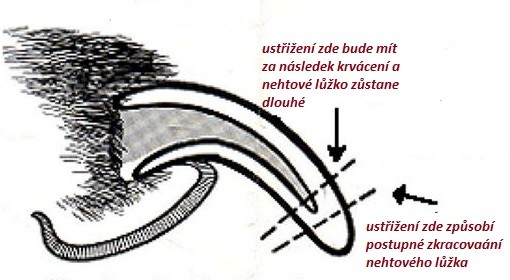
For dogs with light-colored nails, it's fairly easy to estimate what length to cut. The pinkish part contains living tissue, so we must cut just below it - if you see a red dot, don't cut any further. For black nails, we need to proceed more carefully. Better to cut several times gradually than once and too much. Injuring the nail is very painful for the dog and can bleed a lot.

What to do in case of bleeding

Keep a cool head - these things happen, and if we start panicking, we certainly won't help the dog. Stop the bleeding and reward your pet with a treat so they don't associate trimming with an unpleasant experience. Leave trimming the other nails for another day when everyone is in a better mood.


Don't underestimate regularity

If you don't trim the nails regularly, the area with living tissue will lengthen, and shortening will be limited. Regularity also teaches your dog that nail care is normal and nothing to get worked up about.

Summary and tips for the first trimming

To make the battle a bit easier, it's good to devote some time to the first trimming. First, we teach our four-legged friend that we won't hurt their paws. We practice touching the paws, and if everything goes well, we try applying light pressure or touching the nails with the clippers. Once we've mastered contact, we can start trimming:

  • Choose a time when the dog is relaxed, exercised, and resting.
  • Use only special clippers for dog nails.
  • Cut only the part without living tissue.
  • Reward the dog after each nail. When you finish the whole paw, praise them thoroughly - they should associate trimming with a feeling of comfort and joy.
  • If an accident happens and you cut wrong, don't panic. The dog shouldn't sense stress from you.
  • Try to care for the paws regularly.


You can get inspired, for example, by this video that shows how to achieve trimming without unnecessary stress.